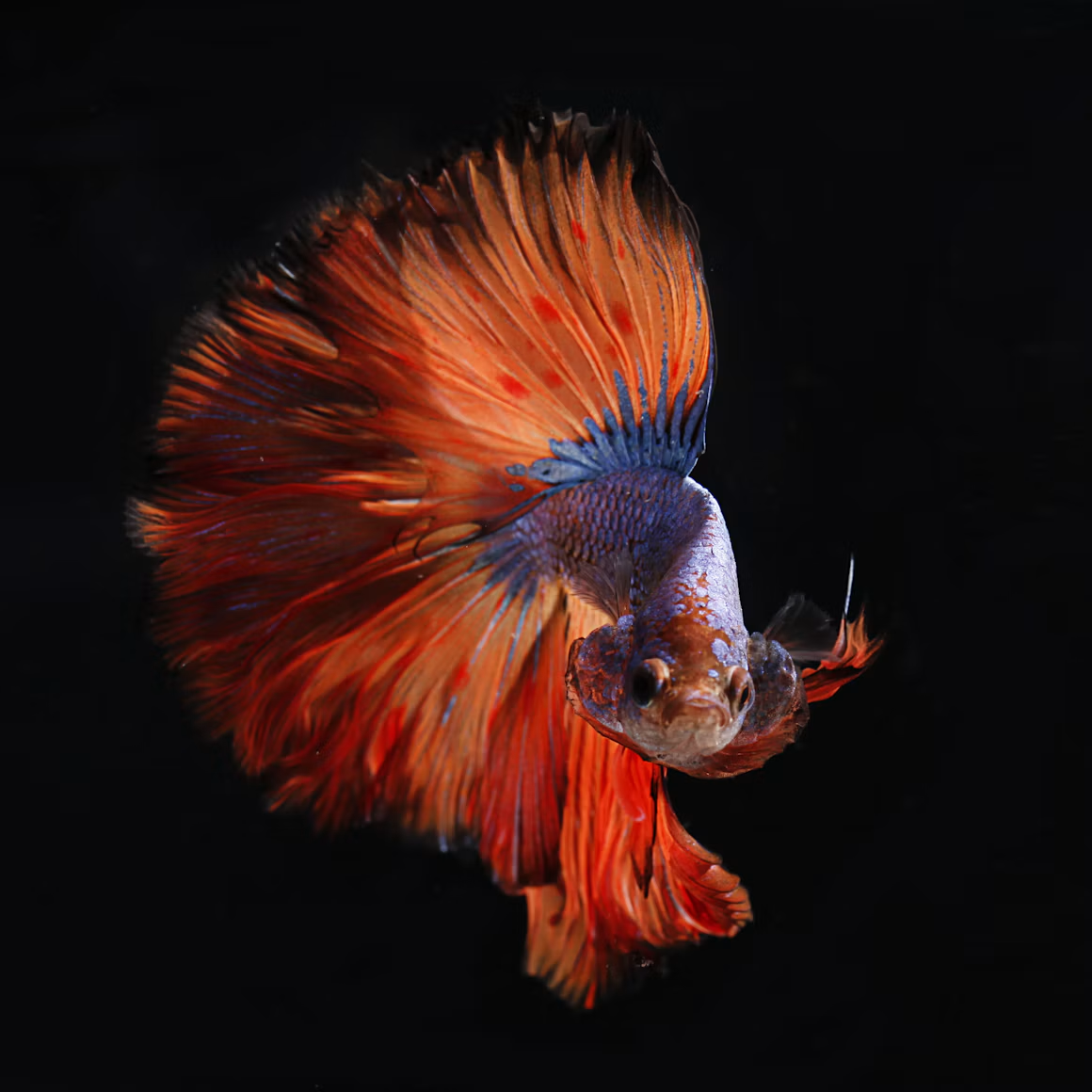
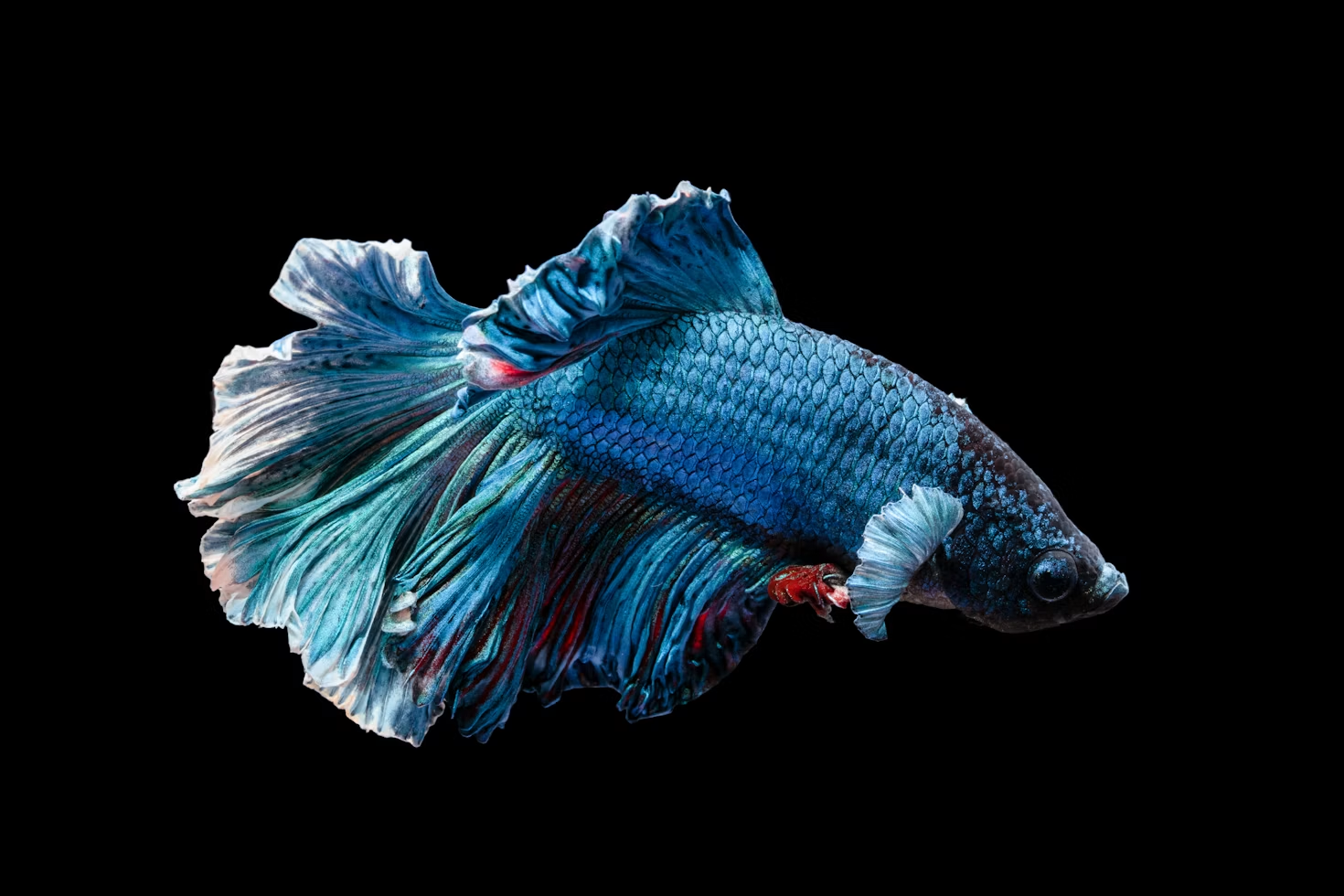
Contrary to common belief, these guys need a large space to have
a comfortable and happy life. It is recommended to have at least 19 liters
tank however, it's always the bigger, the better with these guys.
A betta fish diet should be consisting of high-protein, animal-based
carnivorous foods containing at least 40% protein. Generally
try to make a variety diet, consisting of blood-worms,
brine shrimps and if possible, live food like mosquitoes. Since
in their natural habitat they primarily consume live food, a protein heavy
diet would keep them energetic and happy.
ABSOLUTELY NOT. They may not seem like it but betta fish are
extremely territorial, they are actually also known as 'Siamese fighting fish'.
They are incredibly aggressive towards their own kind (-and some other fish for that matter).
Putting them together would result in almost certain death. They are
naturally not social creatures, but they can tolerate some tank mates without getting stressed
like mystery snails, nerite snails or small shrimp types.
The nitrogen cycle in a fish tank is a natural biological process that converts toxic
fish waste into safer chemical compounds. This is essential knowledge to everybody
who keeps a tank. The cycle consists of 3 steps:
|
|
|---|